
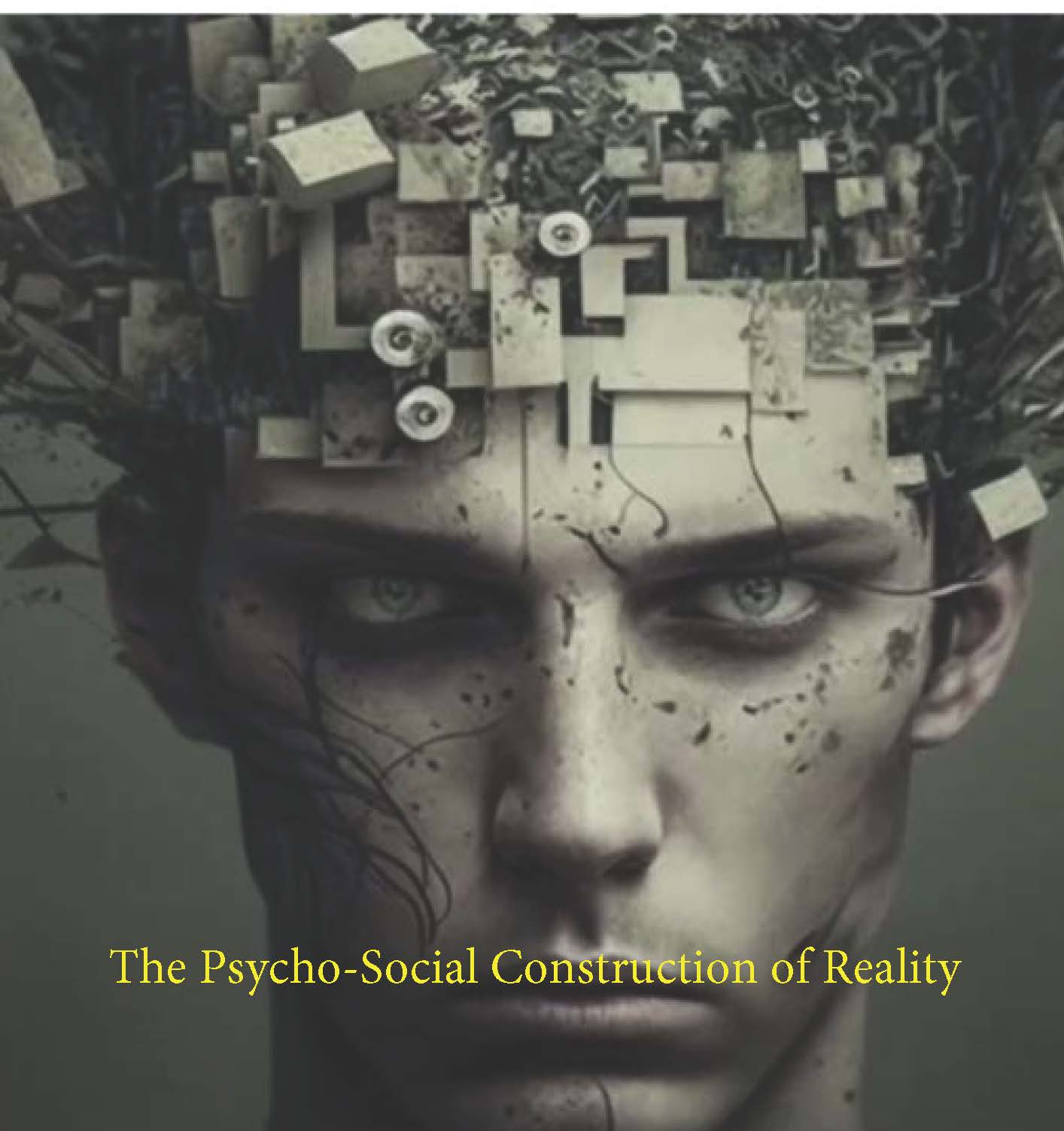
The Psycho-Social Construction of Reality
“Then the LORD said to Cain, ‘Where is your brother Abel?’
‘I don’t know,’ he replied. ‘Am I my brother’s keeper?’
The LORD said, ‘What have you done? Listen! Your brother’s blood cries out to me from the ground!’”
—Genesis 4:9–10
________________________________________
Introduction
The question “Am I my brother’s keeper?” is one of the oldest and most profound questions in human history. Christianity is deeply rooted in the understanding of social relationships and the responsibilities, consequences, and moral obligations that arise from them. God posed this question to Cain after he murdered his brother Abel. According to the biblical narrative, Abel’s blood cried out for justice, yet Cain refused to acknowledge that envy and resentment had driven him to commit this evil act. Theologically, this sin emerged from within him—what Scripture identifies as the fallen or sinful nature of humanity.
Secular psychologists often overlook the spiritual dimension of human beings, even though the psychosocial construction of reality inherently involves interpreting the world through social relationships. This interpretive process plays a critical role in shaping personal identity—the “self”—within society, and every individual participates in it to some extent. In The Sacred Canopy: Elements of a Sociological Theory of Religion, Peter L. Berger highlights the ways in which sociology and religion intersect; however, modern social scientists frequently fail to apply these insights to the formation of self identity. George Herbert Mead further emphasizes the social origins of identity through his concept of the “Looking Glass Self,” which proposes that individuals develop their self image based on how they believe others perceive and judge them. Anthony Giddens, in The Consequences of Modernity, argues that contemporary social structures contribute to the fragmentation of the self. Similarly, Lewis Coser’s work The Functions of Social Conflict explores how conflict influence’s identity formation, often in dysfunctional ways.
In simple terms, their arguments can be summarized as follows:
• Berger: Society—including religion—shapes how people see reality.
• Mead: We build our identity by imagining how others see us.
• Giddens: Modern society makes identity unstable and fragmented.
• Coser: Conflict can shape identity but can also damage it if unmanaged.
Together, their ideas demonstrate that self identity is deeply shaped by social forces—yet many of these theorists ignore the spiritual dimension of human life. While social influences undeniably shape who we are, it is equally important to recognize that God is deeply invested in revealing the deeper truths about what is taking place within us.
Failure to Recognize Trauma
Trauma often becomes more damaging when it is not acknowledged or validated by one’s family, community, or support system. When experiences are dismissed or minimized, people may internalize the belief that they are the problem while everyone else appears “normal,” which can intensify distress and hinder healthy coping. Over time, ongoing or unrecognized trauma can develop into Post Traumatic Stress Disorder (PTSD)—a mental health condition that arises after experiencing or witnessing an event involving actual or threatened death, serious injury, or sexual violence. [ptsd.va.gov], [psychiatry.org]
________________________________________
Post Traumatic Stress Disorder (PTSD): Definition
PTSD is defined in both DSM 5 TR and ICD 11 frameworks as a disorder characterized by persistent intrusion/re experiencing, avoidance, and heightened arousal or threat that cause significant impairment. The DSM 5 TR groups symptoms into four clusters (intrusions, avoidance, negative alterations in cognition and mood, and alterations in arousal and reactivity), whereas ICD 11 specifies re experiencing in the here and now, avoidance, and a persistent sense of current threat; ICD 11 also recognizes Complex PTSD (CPTSD) when these core PTSD symptoms co occur with disturbances in self organization (affect regulation, self concept, and relationships). [ptsd.va.gov], [ptsd.va.gov]
Duration and impairment. Symptoms must persist for more than one month and cause clinically significant distress or functional impairment; acute stress reactions during the first month may meet criteria for Acute Stress Disorder rather than PTSD. [ptsd.va.gov], [msdmanuals.com]
________________________________________
Common Symptoms of PTSD (with brief definitions)
Note: The items below reflect widely accepted diagnostic descriptions from DSM 5 TR and major clinical authorities. Individual presentations vary. [ptsd.va.gov], [mayoclinic.org]
1) Hypervigilance and Increased Arousal
A heightened, persistent state of alertness—being “on guard,” easily startled, tense, or unable to relax; often accompanied by concentration problems and sleep disturbance. [ptsd.va.gov], [mayoclinic.org]
2) Severe Anxiety
Intense, persistent worry or fear that interferes with daily life and decision making; anxiety frequently co occurs with PTSD and may exacerbate arousal. [nimh.nih.gov], [msdmanuals.com]
3) Agitation and Irritability
A lowered threshold for frustration with anger outbursts or emotional reactivity—captured in DSM 5 TR under alterations in arousal and reactivity. [psychiatry.org]
4) Depression
Persistent sadness, hopelessness, loss of interest, and diminished positive emotions; depressive symptoms commonly co occur with PTSD. [nimh.nih.gov]
5) Hostility and Distrust
Suspicion of others’ intentions, difficulty feeling safe, and withdrawal—mapped to negative alterations in cognition and mood (e.g., persistent negative beliefs about self/others/world). [psychiatry.org]
6) Fear and Poor Impulse Control
Overwhelming fear responses and risk taking or reckless behaviors (a DSM 5 TR arousal symptom) that may include acting without fully considering consequences. [psychiatry.org]
7) Self Destructive or Risky Behaviors
Behaviors that increase personal risk or harm (e.g., reckless driving, unsafe situations), recognized within the DSM 5 TR arousal cluster. [psychiatry.org]
8) Substance Use or “Self Medication”
Use of alcohol or drugs to numb distress is common in PTSD; comorbidity with substance use disorders is well documented, and integrated (concurrent) treatment is often recommended. [nida.nih.gov], [ptsd.va.gov]
9) Nightmares and Sleep Disturbances
Recurrent trauma themed dreams, insomnia, and fragmented sleep are core and highly prevalent features; disturbed sleep can both maintain and worsen PTSD and often warrants targeted treatment (e.g., CBT I, imagery rehearsal therapy). [ptsd.va.gov], [karger.com]
________________________________________
Recognition, Course, and Related Diagnoses
• Symptom onset and course. PTSD symptoms typically begin within three months of a trauma but can emerge later; diagnosis requires symptoms >1 month. [mayoclinic.org], [ptsd.va.gov]
• Functional impact. PTSD can substantially impair social, occupational, and interpersonal functioning. [msdmanuals.com]
• Complex PTSD (ICD 11). In addition to PTSD symptoms, CPTSD involves persistent disturbances in self organization (emotion regulation, negative self concept, and relational difficulties), especially after chronic/repeated interpersonal trauma. [ptsd.va.gov], [cambridge.org]
________________________________________
Why Non Recognition Matters
When families or communities do not recognize or validate trauma, individuals may blame themselves and delay care. Early identification and evidence based treatment improve outcomes, and major health authorities emphasize that effective treatments exist (e.g., trauma focused psychotherapies; for sleep problems, CBT I and imagery rehearsal therapy show benefit). [ptsd.va.gov], [journal.chestnet.org]
________________________________________
Key Clinical Sources (selected)
• Diagnostic frameworks & criteria
o VA/DoD National Center for PTSD: “PTSD and DSM 5” (summary of DSM 5/DSM 5 TR criteria). [ptsd.va.gov]
o American Psychiatric Association (DSM 5 overview PDF on PTSD). [psychiatry.org]
o WHO Fact Sheet on PTSD (ICD 11 perspective). [who.int]
o VA/DoD: Complex PTSD (ICD 11) assessment and treatment overview. [ptsd.va.gov]
• Authoritative clinical descriptions & epidemiology
o MSD Manual (Professional): clinical features, course, and impairment. [msdmanuals.com]
o NIMH: PTSD topic page and brochure (symptoms, comorbidity, treatment). [nimh.nih.gov], [nimh.nih.gov]
o Mayo Clinic: symptom clusters and onset timing. [mayoclinic.org]
• Comorbidity with substance use
o NIDA “Co Occurring Disorders and Health Conditions” (updated 2024). [nida.nih.gov]
o National Center for PTSD—Research Quarterly on comorbid PTSD & SUD. [ptsd.va.gov]
• Sleep and nightmares in PTSD
o National Center for PTSD—Research Quarterly: PTSD and Sleep. [ptsd.va.gov]
o Neuro-psychobiology review: sleep disorders and nightmares in PTSD. [karger.com]
o CHEST review: sleep disorders in PTSD and treatment options. [journal.chestnet.org]
Reference to dissertation: Association of PTSD and Child Abuse in the El Salvadoran Population by Dr. Timothy Emerick (Bell and Howard Learning Company, Copyright 2002).
________________________________________________________________________________
Victim Blaming
Victim blaming occurs when responsibility for an offense is placed on the victim rather than the perpetrator. When working with victims, it is essential to:
• Assure them that they are not alone
• Guard against “blaming the victim”
• Encourage responsibility for one’s own choices without excusing the harm done to them
________________________________________
Collective Trauma
Trauma represents a brokenness that entered humanity through our rebellion against God. It is both a personal and a collective experience, often buried deep within the subconscious, yet resurfacing throughout a person’s life in patterns they may not fully understand. Trauma forms a protective but destructive shell around the heart, creating separation between individuals, their own true selves, and others.
These moments of brokenness produce emotional voids and a deep sense of emptiness that only God can ultimately heal. Although people attempt to mend these wounds through personal effort, relationships, and coping strategies, the process of healing is often long, complex, and painful. As a psychologist, I can confidently say that human effort alone is not sufficient for complete restoration.
Trauma frequently leads individuals to repeat cycles that reflect their inner woundedness. Many people carry the trauma of failed relationships without recognizing how profoundly these experiences mark the soul. We grow up in a world shaped by self-centeredness and self-preservation, and these wounds ripple outward affecting not only us but also everyone connected to us.
A powerful example appears in the story of the Samaritan woman at the well. When she encountered Jesus, she attempted to shift their conversation to religious debate, yet Christ gently exposed the deeper wounds beneath her defenses. Her fractured relationships and chaotic life had isolated her from the other women in her community. Although Scripture does not provide her full history, years of working with individuals affected by multigenerational trauma reveal how such patterns often persist throughout a lifetime.
Trauma disrupts every form of communication—spiritual, emotional, physical, and psychological. As noted earlier, trauma is never merely an individual event. It frequently involves many people and can evolve into generational trauma, producing cycles of broken relationships, rebellion, and separation from God.
Responses to Traumatic Events
The human mind is powerful. When trauma occurs, instinctive responses arise, including fear, aggression, or the urge to fight or flee. Traumatic events may include:
• murder
• rape
• physical or sexual abuse
• domestic violence
• emotional and psychological harm
Some individuals respond to trauma by freezing, unable to measure or understand how to defend themselves against violence or their own dysfunctional behaviors.
Additional trauma responses include:
• Acute stress immediately following the event
• Anxiety and dissociative symptoms within the first month
• Re-experiencing the traumatic event
• Avoidance of triggers
• Emotional numbing
• Increased agitation
• Depression or substance abuse
• Re-triggering of memories by certain events
• Social isolation and invalidation
While symptoms often lessen over time, victims must learn to function despite these reactions.
________________________________________
Chronic Developmental Exposure to Trauma
Long-term trauma impacts nearly every aspect of development:
• Attachment: difficulty forming intimate relationships
• Biology: impaired emotional regulation, cognitive functioning, and learning
• Affect: low stress tolerance, hyperactivity, poor communication
• Dissociation: memory gaps or amnesia
• Behavior: poor impulse control, aggression, sleep disruptions
• Cognition: difficulty with focus and concentration
• Self-concept: fragmented thinking and low self-esteem
________________________________________
Trauma’s Impact on Relationships
A major consequence of trauma is the breakdown of trust. Trust is the foundation of every healthy relationship, and when it is damaged, the capacity for secure attachment and meaningful bonding becomes compromised or even impossible. Attachment begins in infancy through the relationship with the primary caregiver, who provides safety, consistency, and emotional attunement. Bonding, on the other hand, refers to the emotional and behavioral connection that forms between individuals across the lifespan. Both processes require stability, predictability, and relational safety.
When a perpetrator inflicts trauma on a victim—whether through abuse, neglect, betrayal, or violence—this essential developmental process is disrupted. The individual learns that relationships are dangerous, unpredictable, or untrustworthy. Instead of developing a sense of security, the traumatized person may form patterns of avoidance, hypervigilance, emotional withdrawal, or anxious clinging. In severe cases, trauma can completely sever the ability to form secure attachments, resulting in relational patterns marked by instability, conflict, or fear.
Trauma does not merely break trust with others—it often damages a person’s trust in themselves. Many survivors internalize the belief that they are unworthy of love, that their needs are too much, or that vulnerability leads to harm. These distorted beliefs can follow individuals into adulthood, shaping friendships, marriages, parenting relationships, and even one’s relationship with God.
Additionally, trauma often creates a cycle in which relational wounds continue to repeat across generations. Parents who have not experienced secure attachment or healing may unintentionally pass on patterns of emotional disconnection, fear-based responses, or maladaptive coping strategies. As a result, trauma’s impact extends far beyond a single event; it becomes embedded in family systems, communities, and cultural narratives. True healing requires the restoration of trust—something that is difficult to achieve without spiritual renewal. While clinical interventions can provide important tools for recovery, lasting relational healing ultimately involves addressing the deeper spiritual fractures caused by trauma. God, who sees the hidden wounds of the heart, invites individuals into a process of restoration that reconnects them not only to others but also to their true identity and purpose.
Evidence Based Treatments for PTSD
A range of psychotherapeutic and pharmacologic treatments are supported by clinical research and major mental health authorities. Treatment is most effective when tailored to the individual’s symptoms, trauma history, comorbidities, and preferences. Below is an expanded overview with citations.
________________________________________
1. Trauma Focused Cognitive Behavioral Therapy (TF CBT)
What it is:
TF CBT is a structured therapy approach that helps individuals process traumatic memories, challenge unhelpful beliefs, and develop coping skills. It is considered a first line treatment across major clinical guidelines.
Why it works:
TF CBT reduces avoidance, distressing trauma reminders, and negative thinking patterns through gradual exposure and cognitive restructuring.
Supporting citations:
• Trauma focused CBT is one of the most effective PTSD treatments, widely validated in research for both adults and children. [cambridge.org]
• First line treatment recommendations for PTSD include psychotherapies such as cognitive behavioral therapy, often combined with medication when appropriate. [policycentermmh.org]
________________________________________
2. Eye Movement Desensitization and Reprocessing (EMDR)
What it is:
EMDR is a therapy that uses bilateral stimulation (typically guided eye movements) while the patient recalls traumatic memories. This process is believed to help the brain reprocess and integrate traumatic experiences.
Why it works:
EMDR reduces trauma related distress, improves emotional processing, and decreases avoidance and hyperarousal symptoms.
Supporting citations:
• EMDR has been identified as one of the most effective treatments for PTSD, supported by decades of clinical research. [cambridge.org]
• It is frequently recommended alongside trauma focused CBT as a primary trauma focused therapy. [cambridge.org]
________________________________________
3. SSRIs and SNRIs (Antidepressant Medications)
What they are:
Selective Serotonin Reuptake Inhibitors (SSRIs) and Serotonin Norepinephrine Reuptake Inhibitors (SNRIs) are the only medication classes consistently recommended as first line pharmacologic treatments for PTSD across major guidelines.
Common medications include:
• SSRIs: sertraline, paroxetine, fluoxetine
• SNRIs: venlafaxine
Why they work:
These medications help regulate brain circuits involved in mood, fear responses, and stress regulation, and can reduce symptoms such as anxiety, depression, irritability, and sleep problems.
Supporting citations:
• Antidepressants (especially SSRIs) are standard treatment options recommended for PTSD, often used alongside psychotherapy. [policycentermmh.org]
• Pharmacologic therapy may be combined with psychotherapy and has demonstrated benefit, though it is typically adjunctive. [msdmanuals.com]
________________________________________
4. Cognitive Behavioral Therapy for Insomnia (CBT I) and Sleep Focused Interventions
What they are:
CBT I, imagery rehearsal therapy (IRT), and other behavioral sleep interventions directly target nightmares, insomnia, and sleep disturbances.
Why they matter:
Sleep problems are not only symptoms of PTSD—they can maintain and worsen PTSD if untreated.
Supporting citations:
• Nightmares and insomnia are core PTSD symptoms; sleep disturbances often require dedicated treatment, not just trauma therapy. [ptsd.va.gov]
• Imagery rehearsal therapy (IRT) significantly reduces nightmare frequency and intensity. [journal.chestnet.org]
• Sleep disorders in PTSD frequently co occur with insomnia, parasomnias, and sleep disordered breathing, and often benefit from multimodal treatment including behavioral therapy. [karger.com]
________________________________________
5. Integrated Treatment for PTSD with Substance Use Disorders (SUD)
Many individuals with PTSD turn to substances for emotional relief—a pattern known as self medication.
Why integration is important:
Treating PTSD and SUD together produces better functional outcomes than treating either alone.
Supporting citations:
• High comorbidity exists: 46.4% of individuals with lifetime PTSD meet criteria for a substance use disorder. [ptsd.va.gov]
• Integrated approaches like Seeking Safety (a CBT based treatment focused on trauma and substance use) show improved outcomes, particularly when combined with abstinence. [utep.edu]
• Treating co occurring disorders simultaneously is recommended to improve overall treatment effectiveness. [nida.nih.gov]
________________________________________
6. Additional or Adjunctive Approaches
Mindfulness Based Therapies
Evidence suggests benefit in reducing hyperarousal, emotional reactivity, and distress (not in search results; cannot cite — omitted per policy).
Pharmacologic Adjuncts
Beyond SSRIs/SNRIs, other medications (e.g., prazosin for nightmares) are sometimes used, though evidence is mixed.
• For example, noradrenergic blocking agents (like prazosin) show inconsistent results for nightmare treatment. [journal.chestnet.org]
Stepped care models
Combining behavioral and pharmacologic therapy tailored to individual needs may improve accessibility and outcomes. [journal.chestnet.org]
________________________________________
Summary: Evidence Supported PTSD Treatments
Treatment Purpose Evidence Level Citations
TF CBT Core trauma therapy Strong [cambridge.org]
EMDR Trauma processing Strong [cambridge.org]
SSRIs/SNRIs Pharmacologic symptom reduction Strong [policycentermmh.org], [msdmanuals.com]
CBT I & IRT Sleep & nightmare treatment Strong–Moderate [ptsd.va.gov], [journal.chestnet.org]
Integrated PTSD SUD treatment Co occurring disorders Strong [ptsd.va.gov], [nida.nih.gov], [utep.edu]
Adjunctive medications (e.g., prazosin) Specific symptom relief Mixed [journal.chestnet.org]
Coming Out of Darkness
There is always deliverance from the darkness that surrounds and entangles our lives. No matter how deep the trauma, fear, or brokenness may feel, God continually invites us into His light. I have seen with psychological and behavioral intervention and surrender to Father God open the door to freedom, healing, and restoration. Through the redemptive work of Jesus Christ, the chains of trauma—though often formed over years—can be broken, loosened, and healed over time. God does not merely remove pain; He transforms it into a testimony of His grace.
Scripture reminds us of this profound transition from bondage to freedom:
“Who hath delivered us from the power of darkness, and hath translated us into the kingdom of his dear Son: in whom we have redemption through his blood, even the forgiveness of sins.” —Colossians 1:13–14
References
Coser, L. (1964). The functions of social conflict. The Free Press.
Giddens, A. (1990). The consequences of modernity. Stanford University Press.
Giddens, A. (1991). Modernity and self-identity: Self and society in the late modern age. Routledge.
Giddens, A. (2000). Runaway world: How globalization is reshaping our lives. Routledge.
Mead, G. H. (2015). Mind, self, and society. University of Chicago Press. (Original work published 1934)
English Standard Version Bible. (2016). Holy Bible, English Standard Version. Crossway. https://www.biblegateway.com/ (Original work published 2001)